From the valley to the vineyard

Wine-growing in the Aosta Valley is a truly heroic endeavour,

The discovery of which will take visitors on a journey through tradition and the constant, tenacious pursuit of excellence – the result of experimentation, imports, bold choices and natural selection, which ensure a rich array of indigenous varieties and prestigious wines, now recognised internationally.
Wines from the Aosta Valley are grouped under a single Controlled Designation of Origin (DOC) – Valle d’Aosta – Vallée d’Aoste, comprising 7 regional sub-appellations (Blanc de Morgex et de la Salle, Enfer d’Arvier, Torrette, Nus, Chambave, Arnad-Montjovet and Donnas) and 15 grape variety sub-appellations (Chardonnay, Cornalin, Fumin, Gamay, Mayolet, Merlot, Müller Thurgau, Nebbiolo, Petite Arvine, Petit Rouge, Pinot Blanc, Pinot Gris, Pinot Noir, Prëmetta and Syrah).

The wine tourism experience in the Aosta Valley is therefore something to be savoured in a profound and visceral way. Vineyard tours accompanied by music, wine tastings at Europe’s highest vineyards, and trekking and e-bike rides through the vineyards are just some of the experiences you can enjoy by contacting the wineries.

Click here to find all the wineries open to visitors and wine-related events to help you plan your holiday in the Aosta Valley

Valdigne

In the Valdigne, at the foot of Mont Blanc, the high altitude of the vineyards (1,200 metres) – among the highest in Europe – enables the production of fine wines, This region is characterised by the presence of Prié Blanc, the only indigenous white grape variety traditionally grown on low pergola trellises, which is now one of the ungrafted varieties – not grafted onto American rootstock – and forms the basis of Blanc de Morgex et de La Salle, the Aosta Valley’s white wine par excellence.

A particularly evocative moment is the harvest of overripe grapes (Chaudelune or vin de glace), which are left to dry in the vineyard and harvested – at temperatures between -5 and -10° – during the first frosts of December, to be pressed whilst still frozen and left to ferment in oak barrels and casks made from local woods.
In addition to white wines and passito wines, the classic method sparkling wines are also worth mentioning, notably the ‘Quatremillemètres vins d’altitude’ label, which combines innovation with the distinctive character of the terroir.

The ‘high-altitude sparkling wine’ experience, made possible by a collaboration between Cave Mont Blanc and the Courmayeur Guides’ Association, is certainly worth noting.
In addition to white wines and passito wines, the classic-method sparkling wines are also worth mentioning, particularly the ‘Quatremillemètres vins d’altitude’ label, which combines innovation with the distinctive characteristics of the region. It was 20 July 2009 when the first bottle of Blanc de Morgex et de La Salle Metodo Classico Extrabrut “Cuvée des Guides” was “chopped” at the summit of Mont Blanc – an experience that is now possible by taking the Skyway Monte Bianco up to the experimental cellar located at the Pavillon du Mont Fréty station.
In addition to white wines and passito wines, the classic method sparkling wines are also worth mentioning, particularly the ‘Quatremillemètres vins d’altitude’ label, which combines experimentation with the distinctive characteristics of the terroir.

Zona dell’Enfer

Enfer wines are produced mainly in the Arvier and Avise area, near imposing rock faces characterised by a distinctive, very hot microclimate (hence the name ‘enfer’), which allows red grape vines to thrive at altitudes of over 800 metres on the south-facing slopes. It is precisely these characteristics that have made this place a favourite spot for vine-growing for centuries.

The first documented reference to viticulture in Arvier dates from 1312: a survey confirming that Rodolphus de Avisio owned a vineyard in the Enfer area. And, according to the historian Carlo Passerin d’Entrèves, ‘Enfer’ also appears in a chronicle from 1494, as one of the wines with which Canon Giorgio di Challant welcomed King Charles VIII of France, who was passing through the Aosta Valley.

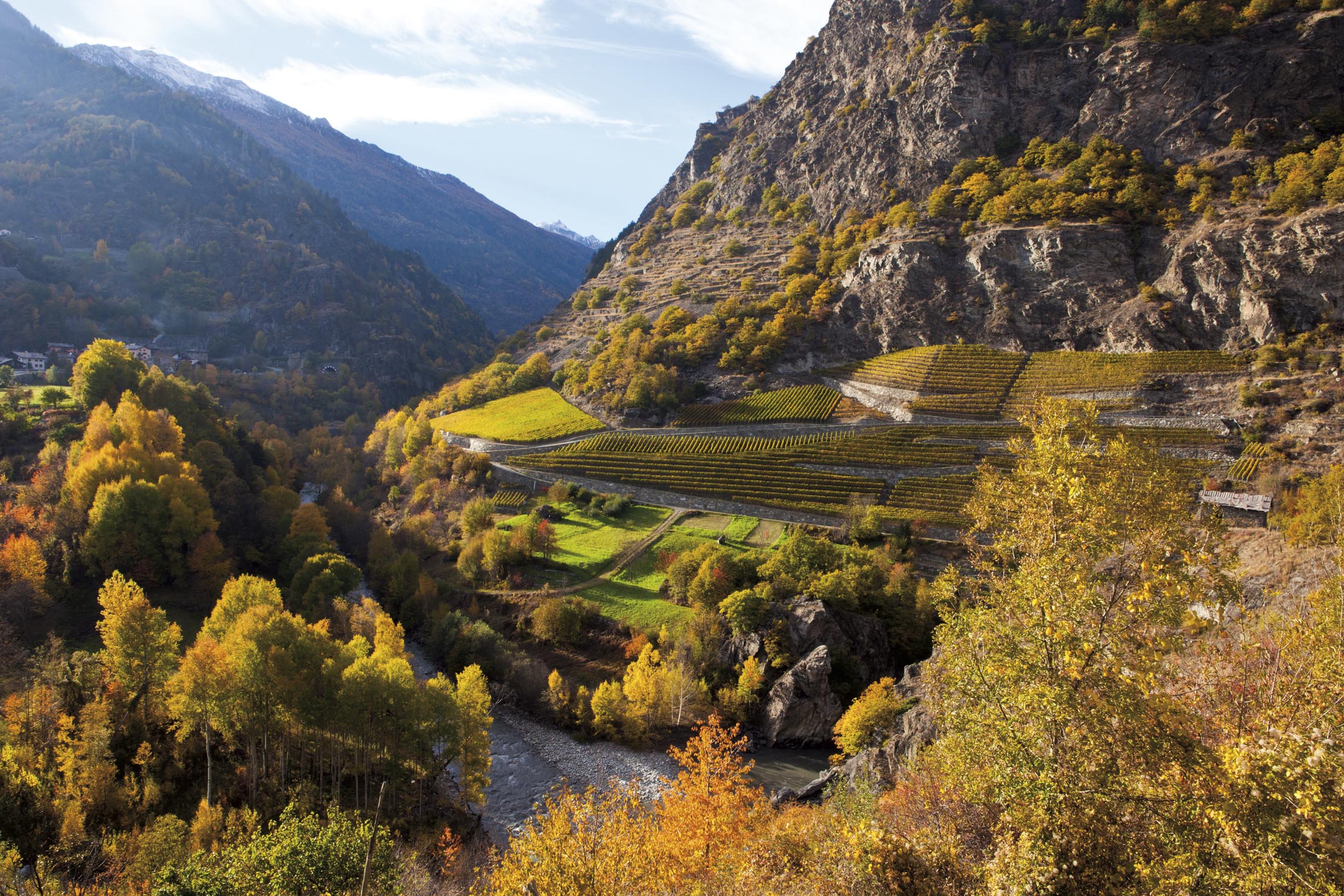
This area, too, offers some truly picturesque views and panoramas, dominated by the terraced landscape typical of ‘heroic’ viticulture.

Come and discover the vineyards in this area by taking part in one of the experiences organised by the local winegrowers.

Grand Paradis – Zona del Torrette

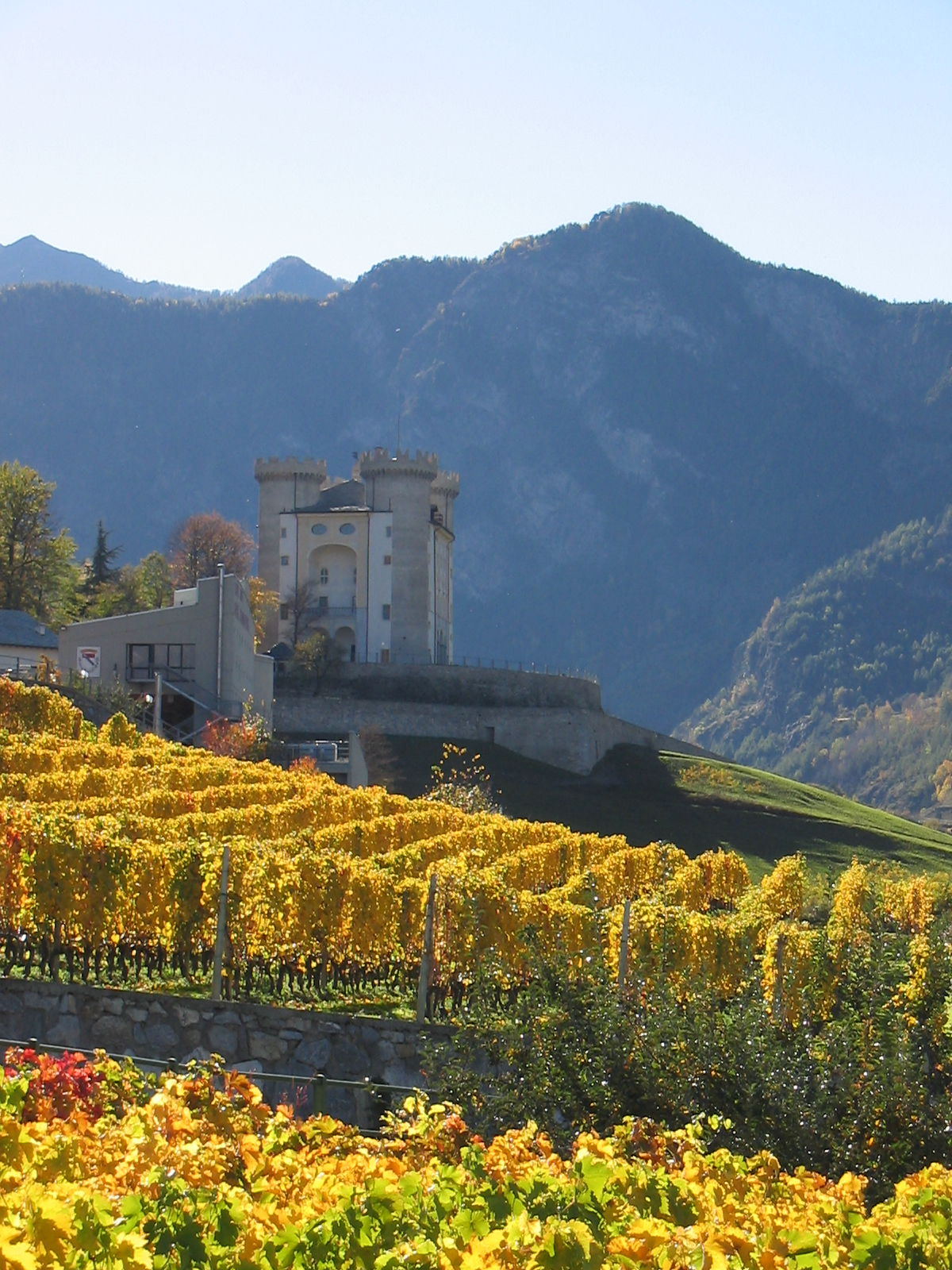
On either side of the Dora river – in the municipalities of Villeneuve, Saint-Pierre and Sarre on the ‘adret’ side, and Aymavilles, Jovençan and Gressan on the opposite ‘envers’ side – nature and history blend seamlessly, offering visitors the chance to discover a varied and well-cultivated landscape, where the vineyards seem to embrace the castles that overlook the entire area from above.
In addition to white wines and passito wines, the classic method sparkling wines are also worth mentioning, particularly the ‘Quatremillemètres vins d’altitude’ label, which combines experimentation with the distinctive characteristics of the terroir.
Torrette, the most widely produced wine from the Aosta Valley, reaches its full potential in the wine-growing region of the plaine. A harmonious wine with a dry, crisp flavour; the ‘supérieur’ version is characterised by grapes with a higher sugar content and a longer ageing period. And then there is Fumin, a wine with an intense colour, well-suited to traditional ageing in wood, the finest examples of which are produced from sandy soils with good southerly exposure, alongside Cornalin and Pinot Noir.
There is also a substantial range of white wines: the aromatic Müller-Thurgau; the delicate Petite Arvine, with its refined, fruity aroma, a salty note on the palate and a straw-yellow colour; and the Chardonnay and Pinot Gris, which can be tasted not only at the Cave des Onze Communes but also at private producers in Jovençan and Gressan.

In this area, you can also visit the permanent exhibition of Aosta Valley wines, housed in the Granges of Aymavilles Castle – a must-see for discovering and tasting the region’s leading wines.

Middle valley

This area is characterised by the presence of Moscato Bianco grapes, which are used to produce the Vallée d’Aoste Chambave Muscat DOC. This process produces a fine wine, bright straw-yellow in colour with golden highlights, full-bodied, dry, with just the right alcohol content, and a subtly bitter aftertaste. It is best enjoyed on its own, particularly as an aperitif, although it also pairs well with shellfish and medium-aged cheeses.

The steep gradients that characterise this area are a defining feature of the landscape. In fact, espalier vine training is the predominant method here, creating some truly picturesque rural landscapes that are well worth visiting – and which you’ll fall head over heels in love with through one of the wine tourism experiences offered by the local winegrowers.

Bassa valle

The mountains in this area are characterised by vineyards on the ‘adret’, the sunny slope, where the grapes are warmed from the early hours of the morning until sunset. It is on those terraces that Donnas DOC is produced – the first wine in the Aosta Valley to be awarded the Denominazione di Origine Controllata (DOC) designation – for which Nebbiolo grapes, known locally as Picotendro, are predominantly used.

This “mountain cousin of Barolo” can easily be tasted at the Caves Coopératives de Donnas, which—in addition to organizing tours through the vineyards, sometimes in collaboration with the Forte di Bard—helps manage the small but charming Wine Museum in the town of Donnas.
Content

Kiuva, an agricultural cooperative that also raises livestock, is well worth a visit. There, you can taste Arnad-Montjovet DOC paired with the renowned Lardo d’Arnad DOP and other locally produced cured meats such as boudin or the more aged saouseusse, as well as other products whose flavors reflect the rural Alpine tradition.

Some local winemakers in the area offer tours—by reservation—to interested tourists, allowing them to discover their exquisite Nebbiolo DOC wines, which feature an almondy flavor, good body, and a tannic finish.